

Cheaper, Cleaner, Closer: The New Logic of European Chemistry
Cheaper, Cleaner, Closer: The New Logic of European Chemistry
The conventional wisdom says sustainable chemistry costs more, and complex supply chains are unavoidable. Both are wrong. Why Europe's chemical industry is at an inflection point and how a new generation of startups, including our portfolio company DudeChem, is proving it.
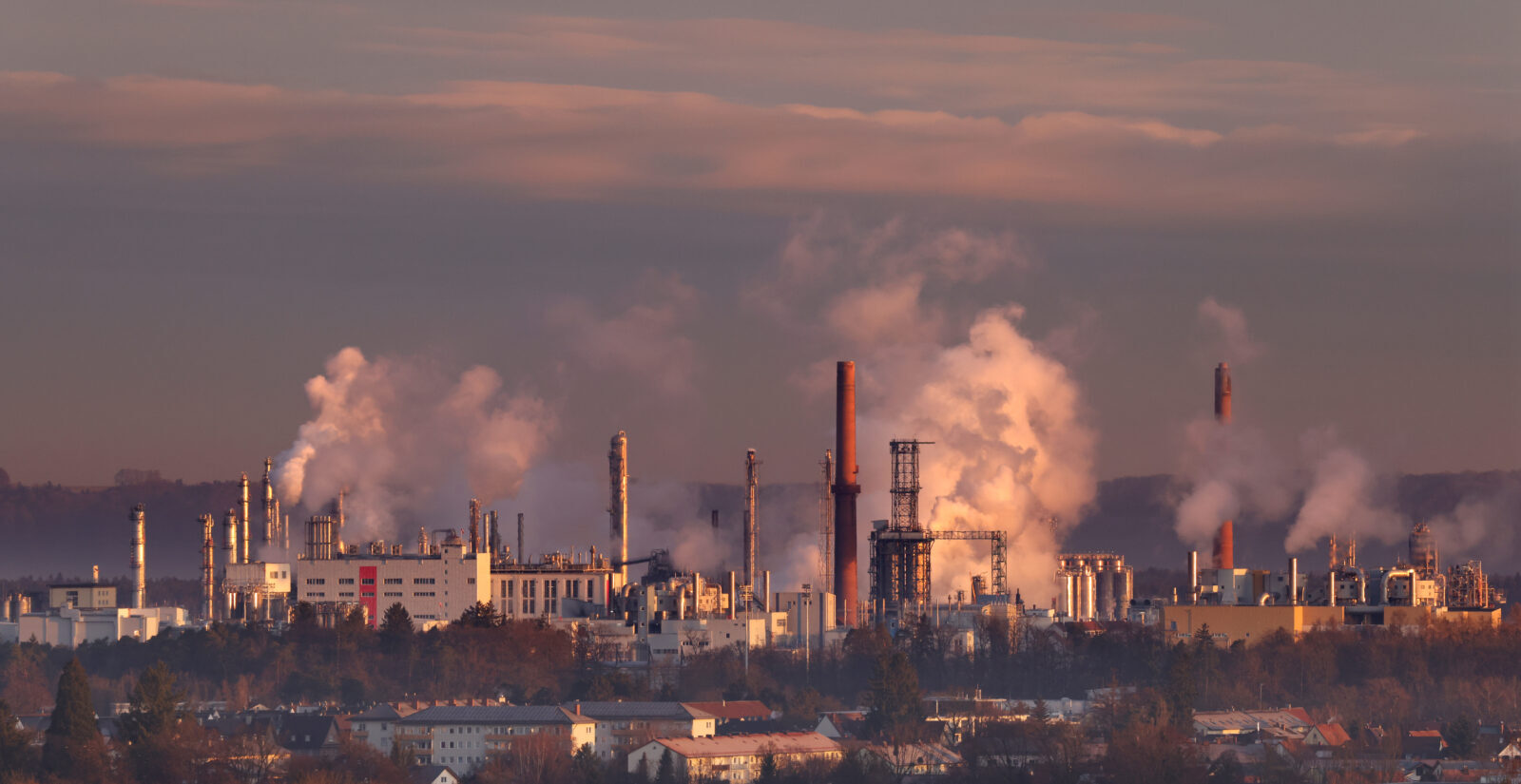
I grew up about twenty minutes from one of the most important chemical regions in the world. The Chemiegürtel runs along the Rhine south of Cologne and generates more than a quarter of Germany's entire chemical industry revenue. All the major German chemical corporations are represented there.
I must have driven past it a hundred times as a kid. I never once wondered what was happening inside.
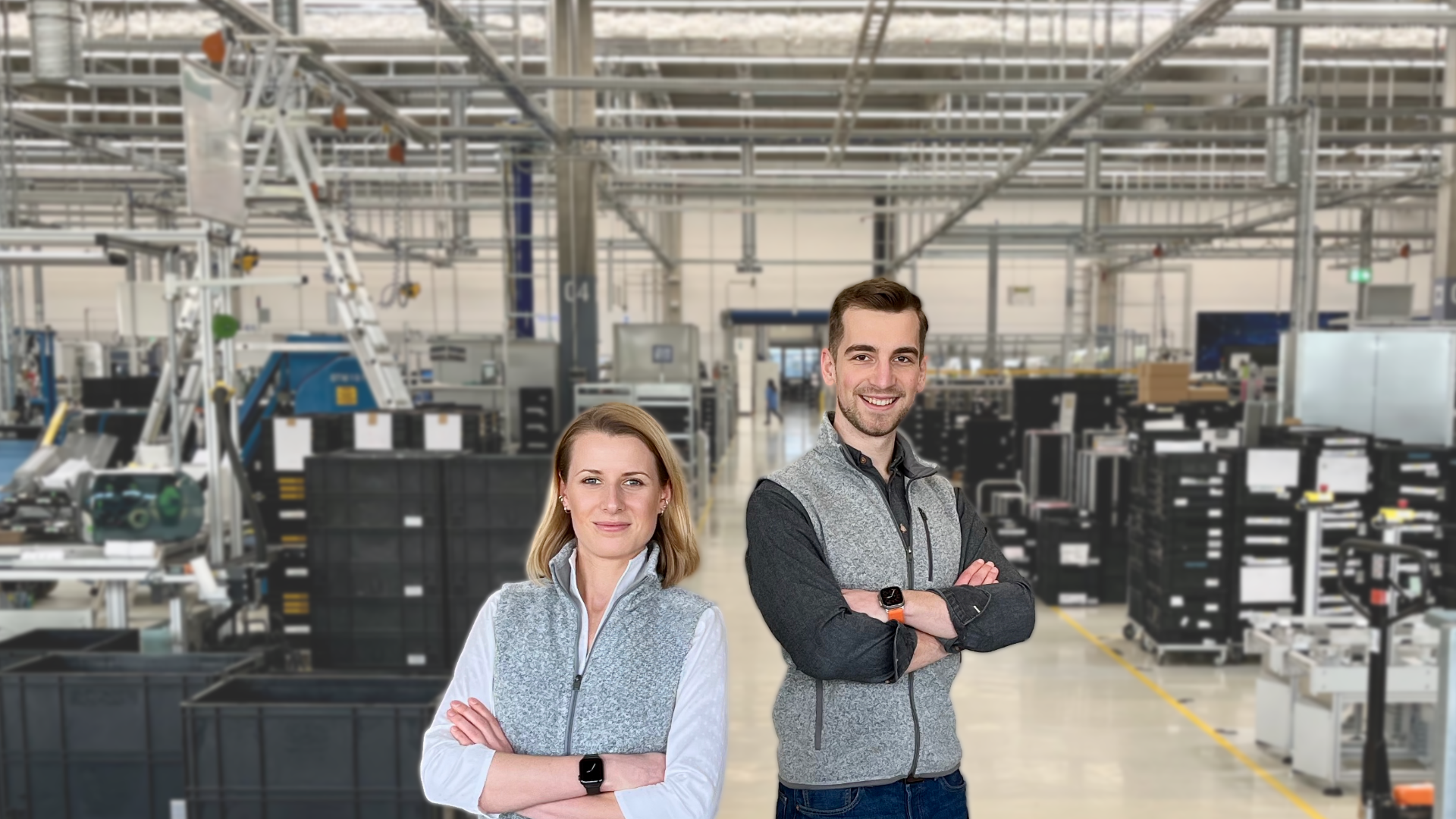
That changed when I met Sonja and the team at DudeChem. They explained, in plain terms, how specialty chemicals are actually produced today: the number of process steps involved, the energy intensity, the waste most people never see, and the dependence on supply chains that stretch halfway around the world.
Two things struck me most from that first conversation. First, a genuine embarrassment at how little I had registered about a sector that underpins almost every European value chain. Second, a growing conviction that the assumptions governing that sector for decades – that sustainable chemistry costs more, and that complex global supply chains are simply the price of scale – were both about to be proven wrong.
A EUR 7 trillion market at a critical juncture
Chemicals underpin almost every European value chain. The cars we drive, the electronics we use, the healthcare we rely on, the infrastructure that connects us. All of it depends on molecules being synthesized, purified, and transported at an industrial scale. The global chemical and pharmaceutical market is worth roughly EUR 7 trillion, and the Draghi Report named the chemical industry one of three key fields of action for Europe's industrial independence, noting that chemical products account for 43% of the 204 inputs deemed critical to European sovereignty. Yet Europe's position in this industry has been quietly eroding. Its global market share fell from 23% to 13% between 2008 and 2023, while China's grew from 19% to 43% over the same period. And the industry has repeatedly been reminded of how exposed it is. When Russia invaded Ukraine in February 2022, European gas prices surged and the chemical industry absorbed the blow directly. Prices for basic chemicals hit decade-high levels. Plants that had been profitable for decades were suddenly running at a loss.
As we were finishing this post, a new shock arrived. The conflict in the Middle East has disrupted the Strait of Hormuz, through which roughly 20% of global oil and LNG flows. European petrochemical plants source 30 to 40% of their feedstock from Gulf refineries. Force majeure notices are already spreading across chemical markets. As summarized by a German state secretary: the country needs chemistry across the full value chain – from basic chemicals to finished products – not only to ensure resilience, but to preserve German industry altogether.
Why now: three forces arriving at once
What makes this moment genuinely different from prior waves of chemistry digitization is the convergence of three forces that have never fully overlapped before.
The first is technological readiness. AI and machine learning can now be applied meaningfully across the full chemistry lifecycle: route discovery, formulation screening, process development, quality control, and product-level carbon accounting. Data from labs and plants is usable at scale. Outputs are auditable enough for regulated environments. This was not true five years ago.
The second is economics. Elevated energy and feedstock costs turn small process improvements into hard, fast-returning ROI. A point of yield gained, a unit operation removed, a changeover accelerated – these gains now pay back quickly, especially when delivered through software-first approaches rather than greenfield capital investment.
The third is policy and end-market pull. Customers are asking for tighter specifications, faster reformulations, and verifiable traceability. Mid-decade regulations are forcing better data and process discipline across the value chain. Demand and policy are pushing in the same direction, on the same clock.
Europe is well placed to act on all three. The region combines global industrial incumbents, like BASF, Solvay, Arkema, INEOS, Clariant, Covestro and world-class universities including ETH Zurich, EPFL, TU Berlin, Oxford and Cambridge. Initiatives such as GreenCHEM, which bridges green chemistry research and industry through open innovation, technology transfer, and lab infrastructure, are exactly the kind of ecosystem infrastructure that turns academic depth into commercial reality. The combination of industrial scale, engineering depth, and translational research creates ideal proving grounds. What has been missing is a wave of startups willing to go deep into the chemistry itself, rather than building horizontal software on top of it. That wave is now arriving.
DudeChem: proof that the trade-off is a myth
DudeChem designs more efficient synthesis routes and executes them with manufacturing partners, cutting steps, waste, and cost without requiring new plants to be built.
The standard assumption in specialty chemicals is that cleaner production costs more. DudeChem is a proof point that this is wrong. By redesigning the route itself rather than layering sustainability measures onto an inefficient process, you get structurally better unit economics and a lower environmental footprint in the same step. It is not a trade-off. It is a better way of doing chemistry.
The supply chain implication is what we find most compelling. By dramatically reducing the cost and complexity of production, DudeChem makes local manufacturing viable again, enabling the regional supply chains that European industry urgently needs to rebuild resilience. Cheaper, cleaner, and closer to the customer: not as three separate goals, but as one coherent outcome.
The broader ChemTech map
DudeChem sits within a wider cohort of European startups quietly rewriting how legacy chemistry works. Upstream, Chemify uses programmable chemistry to design and execute syntheses digitally, while Dunia uses physics-informed AI and robotic automation to accelerate material discovery. Closer to the plant, Chemastery standardizes recipes and execution on the production line, stabilising quality and enabling targeted shifts toward continuous processing.
On the sustainability side, Cyclize converts difficult carbon streams into usable feedstock, reducing dependence on virgin inputs and insulating supply from price swings. ViridiCO2 uses a proprietary catalyst to turn a manufacturer's own captured CO₂ into high-performance chemical ingredients, replacing fossil-based raw materials without requiring new infrastructure. Level Nine takes a different angle, developing nanozyme catalysts that convert locally available biomass and waste into renewable chemical building blocks that drop into existing processes.
Sitting alongside all of this is an enabling layer that helps the broader industry move faster: Atmospheric AI for risk-aware sourcing, Foresight for automated regulatory monitoring, juna.ai for process optimisation, Gravel for market intelligence, CheMondis for digital B2B discovery and sales, and Incycling for surplus trading. This is a curated snapshot rather than an exhaustive map, but it is indicative of where near-term impact on the legacy industry will concentrate.
Where we are looking
At b2venture, we are looking at companies across the full value chain - from R&D and Discovery, to Sourcing, Production, and Manufacturing. We believe efficiency and sustainability point in the same direction. If you are building in the space, we would love to connect.
The flares above Cologne, revisited
I still drive past the Chemiegürtel when I am back home. The cooling towers, the orange flares - the same landscape I half-noticed for twenty years without understanding it. The difference now is that I know what I am looking at, and I know how much of it is about to change.
Europe's next industrial chapter will not be written by building more of the same at lower cost. It will be written by startups that redesign the routes, standardize the recipes, de-risk the supply chains, and make local production viable again. Cheaper, cleaner, and closer to the customer: not as a compromise, but as a better way of doing chemistry altogether.
The conventional wisdom says sustainable chemistry costs more, and complex supply chains are unavoidable. Both are wrong. Why Europe's chemical industry is at an inflection point and how a new generation of startups, including our portfolio company DudeChem, is proving it.
I grew up about twenty minutes from one of the most important chemical regions in the world. The Chemiegürtel runs along the Rhine south of Cologne and generates more than a quarter of Germany's entire chemical industry revenue. All the major German chemical corporations are represented there.
I must have driven past it a hundred times as a kid. I never once wondered what was happening inside.
That changed when I met Sonja and the team at DudeChem. They explained, in plain terms, how specialty chemicals are actually produced today: the number of process steps involved, the energy intensity, the waste most people never see, and the dependence on supply chains that stretch halfway around the world.
Two things struck me most from that first conversation. First, a genuine embarrassment at how little I had registered about a sector that underpins almost every European value chain. Second, a growing conviction that the assumptions governing that sector for decades – that sustainable chemistry costs more, and that complex global supply chains are simply the price of scale – were both about to be proven wrong.
A EUR 7 trillion market at a critical juncture
Chemicals underpin almost every European value chain. The cars we drive, the electronics we use, the healthcare we rely on, the infrastructure that connects us. All of it depends on molecules being synthesized, purified, and transported at an industrial scale. The global chemical and pharmaceutical market is worth roughly EUR 7 trillion, and the Draghi Report named the chemical industry one of three key fields of action for Europe's industrial independence, noting that chemical products account for 43% of the 204 inputs deemed critical to European sovereignty. Yet Europe's position in this industry has been quietly eroding. Its global market share fell from 23% to 13% between 2008 and 2023, while China's grew from 19% to 43% over the same period. And the industry has repeatedly been reminded of how exposed it is. When Russia invaded Ukraine in February 2022, European gas prices surged and the chemical industry absorbed the blow directly. Prices for basic chemicals hit decade-high levels. Plants that had been profitable for decades were suddenly running at a loss.
As we were finishing this post, a new shock arrived. The conflict in the Middle East has disrupted the Strait of Hormuz, through which roughly 20% of global oil and LNG flows. European petrochemical plants source 30 to 40% of their feedstock from Gulf refineries. Force majeure notices are already spreading across chemical markets. As summarized by a German state secretary: the country needs chemistry across the full value chain – from basic chemicals to finished products – not only to ensure resilience, but to preserve German industry altogether.
Why now: three forces arriving at once
What makes this moment genuinely different from prior waves of chemistry digitization is the convergence of three forces that have never fully overlapped before.
The first is technological readiness. AI and machine learning can now be applied meaningfully across the full chemistry lifecycle: route discovery, formulation screening, process development, quality control, and product-level carbon accounting. Data from labs and plants is usable at scale. Outputs are auditable enough for regulated environments. This was not true five years ago.
The second is economics. Elevated energy and feedstock costs turn small process improvements into hard, fast-returning ROI. A point of yield gained, a unit operation removed, a changeover accelerated – these gains now pay back quickly, especially when delivered through software-first approaches rather than greenfield capital investment.
The third is policy and end-market pull. Customers are asking for tighter specifications, faster reformulations, and verifiable traceability. Mid-decade regulations are forcing better data and process discipline across the value chain. Demand and policy are pushing in the same direction, on the same clock.
Europe is well placed to act on all three. The region combines global industrial incumbents, like BASF, Solvay, Arkema, INEOS, Clariant, Covestro and world-class universities including ETH Zurich, EPFL, TU Berlin, Oxford and Cambridge. Initiatives such as GreenCHEM, which bridges green chemistry research and industry through open innovation, technology transfer, and lab infrastructure, are exactly the kind of ecosystem infrastructure that turns academic depth into commercial reality. The combination of industrial scale, engineering depth, and translational research creates ideal proving grounds. What has been missing is a wave of startups willing to go deep into the chemistry itself, rather than building horizontal software on top of it. That wave is now arriving.
DudeChem: proof that the trade-off is a myth
DudeChem designs more efficient synthesis routes and executes them with manufacturing partners, cutting steps, waste, and cost without requiring new plants to be built.
The standard assumption in specialty chemicals is that cleaner production costs more. DudeChem is a proof point that this is wrong. By redesigning the route itself rather than layering sustainability measures onto an inefficient process, you get structurally better unit economics and a lower environmental footprint in the same step. It is not a trade-off. It is a better way of doing chemistry.
The supply chain implication is what we find most compelling. By dramatically reducing the cost and complexity of production, DudeChem makes local manufacturing viable again, enabling the regional supply chains that European industry urgently needs to rebuild resilience. Cheaper, cleaner, and closer to the customer: not as three separate goals, but as one coherent outcome.
The broader ChemTech map
DudeChem sits within a wider cohort of European startups quietly rewriting how legacy chemistry works. Upstream, Chemify uses programmable chemistry to design and execute syntheses digitally, while Dunia uses physics-informed AI and robotic automation to accelerate material discovery. Closer to the plant, Chemastery standardizes recipes and execution on the production line, stabilising quality and enabling targeted shifts toward continuous processing.
On the sustainability side, Cyclize converts difficult carbon streams into usable feedstock, reducing dependence on virgin inputs and insulating supply from price swings. ViridiCO2 uses a proprietary catalyst to turn a manufacturer's own captured CO₂ into high-performance chemical ingredients, replacing fossil-based raw materials without requiring new infrastructure. Level Nine takes a different angle, developing nanozyme catalysts that convert locally available biomass and waste into renewable chemical building blocks that drop into existing processes.
Sitting alongside all of this is an enabling layer that helps the broader industry move faster: Atmospheric AI for risk-aware sourcing, Foresight for automated regulatory monitoring, juna.ai for process optimisation, Gravel for market intelligence, CheMondis for digital B2B discovery and sales, and Incycling for surplus trading. This is a curated snapshot rather than an exhaustive map, but it is indicative of where near-term impact on the legacy industry will concentrate.
Where we are looking
At b2venture, we are looking at companies across the full value chain - from R&D and Discovery, to Sourcing, Production, and Manufacturing. We believe efficiency and sustainability point in the same direction. If you are building in the space, we would love to connect.
The flares above Cologne, revisited
I still drive past the Chemiegürtel when I am back home. The cooling towers, the orange flares - the same landscape I half-noticed for twenty years without understanding it. The difference now is that I know what I am looking at, and I know how much of it is about to change.
Europe's next industrial chapter will not be written by building more of the same at lower cost. It will be written by startups that redesign the routes, standardize the recipes, de-risk the supply chains, and make local production viable again. Cheaper, cleaner, and closer to the customer: not as a compromise, but as a better way of doing chemistry altogether.

The Author

Anna Bosch
Principal
Anna is Principal in the b2venture fund team, focusing on software solutions across a range of verticals, including EdTech, FinTech, and sustainability, as well as being our in-house expert for all things ESG.
Team






.png)
.jpg)


.jpg)
.jpg)
.jpg)










.png)


.jpg)
-min.png)


.jpg)


.jpg)